Dr. Tiryaki Quoted in M. Tokyay’s Article about Cyprus in SES Türkiye

Dr. Tiryaki Quoted in M. Tokyay’s Article about Cyprus in SES Türkiye

Turkey-EU Relations: Where Do They Stand Going Into 2012?

By Menekşe Tokyay | SES Türkiye

Istanbul, January 3, 2012


2011 did not signal there is a light at the end of Turkey’s EU tunnel, and 2012 looks to be even more problematic.

As Turkey enters 2012, its EU accession process remains on the brink of paralysis. On the political front there has not been any significant progress, while the eurozone crisis has shifted European and Turkish policy makers’ attention away from further expansion and integration.

Since June 2010, not a single new chapter has been opened. Out of 33 chapters, only 13 are open, 17 are blocked, and Turkey appears to have no intention to take the steps necessary to open the remaining three.
The general picture raises questions about whether the road to the EU may well be heading towards a dead end.

Nilgun Arisan Eralp, from the Economic Policy Research Foundation of Turkey (TEPAV), describes EU-Turkey relations as being in a “state of comatose”, adding that the EU has lost almost all leverage over Turkey.

According to another EU expert, Sema Capanoglu of the Economic Development Foundation of Turkey (IKV), there is stagnation in the negotiation process because of the political barriers placed before Turkey by the EU.

The biggest political obstacle to Turkey’s EU accession negotiations remains the dormant Cyprus conflict, over which neither the Greek nor Turkish Cypriots seem willing to budge from their positions.

The inability of both communities on the island to come to agreement is mirrored by Turkey and the EU who, entrenched as they are in their respective policies towards the divided island, leave themselves little room to advance Turkey’s membership prospects.

Nonetheless, 2011 did witness an increased interest by the international community to resolve the Cyprus conflict, which according to Sylvia Tiryaki, deputy director of the Global Political Trends Centre in Istanbul, can be attributed to three main factors: “The initiation by UN Secretary General Ban Ki-Moon of a series of meetings between the leaders of the two communities; the upcoming EU term presidency of the Republic of Cyprus in the second half of 2012 and the Greek Cypriots’ decision to start drilling for offshore oil and gas.”

Tiryaki says that despite the high expectations for a final settlement, resolution of the Cyprus conflict is still not near. “Leaders have been discussing approximately the same issues since 1968 without a major success,” she says, “and 2012 will likely pass in the same fashion.”

“Let’s hope that Greek Cypriots do not try to stage more fait accompli similar to that of unilateral hydrocarbons drilling prior to the final settlement,” she adds.

The upcoming EU presidency of the Greek Cypriots has been a thorny issue that threatens to completely derail Turkish-EU co-operation in a number of areas, with Turkish authorities delivering ultimatums that it will freeze relations with the EU if the Greek Cypriots are handed the rotating EU presidency in July.

In response, EU officials declared at the December summit that Turkey must show full respect for the role of the EU presidency, setting the two sides up for a troublesome relationship in the second half of 2012.

Taking into consideration the barriers to advancing relations, the European Commission announced a new “positive agenda” for EU-Turkey relations in an effort to maintain some degree of momentum. The new agenda will focus on three areas of common concern: resolution of the problems related with the Customs Union; easing of visa requirements; and co-operation in counterterrorism efforts.

“This agenda may help strengthen relations between Turkey and the EU as a complement to the negotiation process,” Selcen Oner of Bahcesehir University underlines.

However, some claim that this new agenda is an attempt to distract attention away from the stalled accession process.

Despite the stand-off over Cyprus, there are also important European actors who say Europe needs Turkey just as much as Turkey needs Europe. Eleven EU foreign ministers published a joint text in EU Observer on December 1st, saying that Turkey’s accession process is of vital strategic and economic importance for both the EU and Turkey.

“It’s common practice to refer to such spectacular initiatives just before big events in the EU, like the summits,” explains former ambassador Ozdem Sanberk. “However, they are also important in terms of balancing the negative messages towards the member states’ public opinions.”

In the face of political roadblocks, Turkey-EU economic ties continue to underpin the relationship, fostered this year by Turkey’s rapid economic growth in a generally bleak global economic environment.

“Despite the economic recession in the EU, 85% of all global investments in Turkey and 92% of investments made in the first half of 2011 came from EU member states,” explains EU expert Capanoglu.

Turkey also became the world’s fastest growing economy with growth of 10.2% in the first half of 2011.

“Turkey has had an increasing self-confidence in 2011 because of its economic growth,” notes Oner.

This self-confidence was reflected in a statement made in December during a visit to Denmark by Turkey’s EU Minister Egemen Bagis, where he said in reference to the European crisis, “Hold on Europe! Turkey is coming to the rescue!”

However much Turkish officials congratulate themselves, Turkey still remains vulnerable to European economic woes and will likely sink or rise along with the economic fate of Europe.

Approximately half of Turkey’s exports go to the EU, while nearly 40% of Turkey’s imports come from the EU.

Europe’s debt crisis has also had an impact on Turkey’s political integration, as the EU focused on making economic recovery a top priority, and shifted away from issues like enlargement.

Economic issues and Cyprus aside, Turkey still faces a long upward struggle to reach European standards, especially those involving fundamental freedoms and democratisation.

Reforms have been slow, and in some areas Turkey even appears to be digressing from its European trajectory, sparking concern and condemnation by the pro-Europe camp in Turkey and policy makers in Europe.

The European Commission’s October progress report for Turkey “emphasised deficiencies in the fields of freedom of speech, freedom of media and long detention periods in Turkey”, explains Oner.

Experts warn that the EU accession process has started to suffer from a lack of domestic ownership and willingness for further reforms. The EU, which had in the past acted as an anchor for reforms, may no longer be playing the same role.

“Turkey has slowed down the reform process with a lack of progress in the fields of transparency, accountability, the fight against corruption, gender equality, the freedom of expression, freedom of the press and labour unions,” Eralp underlines.

Since 1998 — the starting date of the progress reports — the EU has offered a roadmap for domestically-driven efforts at democratisation, argues Professor Murat Somer of Koc University.

“Now that Turkish-EU relations and the EU’s own future are uncertain, the marriage between capitalism and liberal democracy is troubled, and Turks no longer look to Europe to evaluate their democracy. How liberal-democratic will Turkey be in the future?” Somer asks.

Looking forward, analysts see a number of formulas to at least trudge through the coming year.

The ongoing uncertainty in the Middle East and North Africa on the heels of Arab uprisings has increased Turkey’s strategic value to Europe and provided one area where the two partners can work together.

“The relations can be given a fresh impetus, if both parties can benefit from the opportunities provided by the current international conjuncture,” says Eralp, referring to the anti-government, pro-democracy movements sweeping through the Middle East and North Africa.

Still, Sanberk argues the resolution of the Cyprus conflict and the opening of blocked chapters provide the only critical key for paving the way to improved relations.

“There is also an effort from the EU side in order to revive stalled EU-Turkey relations. However, all these efforts can only reach their end if the political and judicial impasses are solved,” he concludes.

Looking at the direction talks between the two communities on Cyprus are heading, the Greek Cypriot’s control of the EU presidency in the second half of 2012, the lack of consensus on Turkey’s membership in EU member states, the eurozone crisis, and the rise of euroscepticism in Turkish public opinion, it is difficult to say that 2012 looks promising for EU-Turkey relations.


To read the article on the website of the original source, click here.

Turkey’s Broken Path to EU Membership | Turkish Review

Turkey’s Broken Path to EU Membership | Turkish Review

Dr. Sylvia Tiryaki wrote an article for Turkish Review’s
October-December 2011 edition with the title of “Turkey’s broken path to
EU membership.” The article argues the following: “As the oil and gas exploration commences off the East Mediterranean island of Cyprus, Turkey’s foundering EU negotiators are again likely to come under the spotlight, despite a lack of interest in the issue.” The article is an examination of the issues faced by Turkey on the road to EU membership, the waning importance of the European bloc in the country’s future and the possible impact of potential hydrocarbon reserves.


 To read the whole article online, please visit the website of its original source here.

International Human Security Conference

International Human Security Conference

Dr. Tiryaki together with Ambassador Yalim Eralp presented respective dinner speeches at the conference series “International Human Security”, under the auspices of Prof. Dr. Madeleine Atkins, Vice-Chancellor of Coventry University. The event was hosted by Kadir Has University, Akdeniz University and Trakya University in Istanbul on 27-28 October 2011.

The purpose of the conference series is to propose people oriented solutions to problems such as poverty, conflict and disaster and to create a scientific forum in order to discuss these topics in the Turkish academic community. Dr. Tiryaki’s speech is available below.

Good evening.

It goes without saying that I feel privileged to able to address this distinguished audience of the human security experts.

Let me begin by thanking the organizers for inviting me and giving me the great opportunity to be here today with you at the Gala Dinner of this highly relevant and timely conference.
It may be cliché – since all “dinner speakers” do the same – yet I would like to acknowledge that it is an awkward position to be in between you and your dinner.

So, let’s keep it short. Yet this presents us with a tough task: speaking briefly about a topic so wide and diverse as human security.

***

We know that even though human security gains increasing attention nowadays, the concept per se is not new at all.

In fact, Thomas Hobbes based his main argument for his social contract theory exactly on the lack of human security in the state of nature. Reflecting the political and social reality of his own times, he called for a political covenant and institution of sovereignty in order to remove human insecurity caused by a natural inclination of all men to violent conflict. In our modern terminology, he was calling upon a sovereign to ensure freedom from fear.

Hobbes’ famous definition of the state of nature as “solitary, poor, nasty, brutish and short” has its antidote in a powerful sovereign who secures peace and thus decreases threats to human security. In return, this sovereign requires full obedience from the public, which has no right to resist political authority.

As Hobbes wrote in Leviathan, by giving up one’s right of governing oneself to the sovereign (be it a single man or an assembly), one has no right to complain of injury from his sovereign, as that would be like someone complaining to himself about doing injury to himself, so to speak.

However, by suggesting the total identification with the sovereign, Hobbes failed to account for the protection of the individual from a political tyrant.

That this was indeed Hobbes’ greatest philosophical failure became apparent not only during the late 1980’s and early 90’s that witnessed the collapse of communists regimes in Central and Eastern Europe, but also recently with the Arab Spring events.

The latter one, i.e. the fight for greater civic and political freedoms in the Maghreb and Middle East, opted for rather a Rousseauist definition of the right to resistance, one that does not exclude violence.

That undoubtedly represents a dilemma vis-a-vis human security, too.

Hence, the question is not only whether to increase human security, and who is responsible for that, but also how to do it.

Obviously, the traditional concept of security is no longer enough. Examples like Rwanda or North Korea have shown that ensuring only territorial security of nation-states through military means does not automatically improve human conditions.

Neither can human security be considered from the national borders perspective anymore. One of the by-products of globalization is a new concept or new global understanding of human security with the individual, a human being, as a point of entry.

The new concept requires a truly holistic approach: combining military security, human rights and development. Or, in other words, safeguarded should be:
security, justice and jobs.

The former UN Secretary-General Kofi Annan expressed it accurately in his March 2005 report, “In Larger Freedom.” “Development, security, and human rights go hand in hand… We will not enjoy development without security, we will not enjoy security without development, and we will not enjoy either without respect for human rights. Unless all these causes are advanced, none will succeed.”

All aspects of this triangle were in fact already envisaged in two of the four freedoms articulated by US President Franklin Delano Roosevelt in January 1941 in his famous “Four Freedoms” speech, namely freedom from want (corresponding with development) and freedom from fear (security).

Here, let me share a small anecdote with you. I just came from a conference that was organized at Hunter College in Roosevelt House in New York. That is the house where the First Lady Eleanor Roosevelt supposedly worked on the first draft of Universal Declaration of Human Rights. The story goes that while four freedoms (speech, religion, fear and want) were very important for her, and they really entered the Preamble of the Declaration, she paid a special attention to another freedom: the right to privacy.

The reason for that was simple: the beautiful Roosevelt House was a wedding gift from the President’s mother Sara and was intimately attached to her own house. Eleanor reportedly complained of her mother-in-law visiting the President and her day and night long.
 
Be that as it may, a balance must be struck between the freedom from want and freedom from fear. Yet, sometimes it seems difficult for the states to maintain a holistic strategy.

The Freedom House’s “Freedom in the World 2011” annual survey of political rights and civil liberties goes under the title “The Authoritarian Challenge to Democracy,” and it marks an overall decline in freedoms in the past five years.

According to the report “Friend not Foe,” prepared by the Fourth Freedom Forum and the Kroc Institute for International Peace Studies at the University of Notre Dame, the global trend toward using aid and development funds for military purposes has accelerated. It claims that analytical boundaries between security and development are being blurred. It also states that development assistance allocated through the Pentagon has increased in recent years from 3.5 percent in 1998 to approximately 25 percent only ten years later. Aid budgets have increased statistically around the world, but fully two-fifths of the increase since 2002 has gone just to two countries: Iraq and Afghanistan.

The British Department for International Development announced in October 2010 that 35 percent increase in development funding over a four year period but the majority of funds are allocated to Afghanistan and Pakistan.

However, the 2010 report prepared by seven humanitarian agencies in Afghanistan argues that Provincial Reconstruction Teams (military teams established by allied forces in Iraq and Afghanistan to play a direct role in providing humanitarian and development assistance) lack the capacity to manage effective development initiatives.        

So, one might wonder: Are we redirecting priorities?

While acknowledging the undisputable challenge posed by various groups indulging in violent activities, including internationally-recognized terrorist organizations, the question of how to effectively enhance human security still remains.

At the philosophical level it might perhaps be argued that it was John Lock who got to the system of good governance most closely. With his understanding of the existence of property rights even prior to the institution of government he might have, in fact, encompassed it all, including the freedom from want or development.

At the practical level – to borrow the words of Mr. Cortright from the Kroc Institute – any boost of human security must be linked to and be backed by mutual democracy, sustainable development, conflict resolution through third parties facilitation (here increasing the role of civil society is important), international diplomacy, and last but not least women’s empowerment and participation in peace processes.

Let me finish with a final but important note on women’s role in peace building.  Its constructive power can be hardly disputed. Therefore, it makes us optimistic to see that even though it took 1000 nominations to get there, three women peace activists won the Peace Nobel Prize this year.

Thank you for your attention and I wish you successful second half of the conference.

Dr. Tiryaki and Dr. Akgün Present a Paper at the IPSA Conference in Sao Paulo

Dr. Tiryaki and Dr. Akgün Present a Paper at the IPSA Conference in Sao Paulo

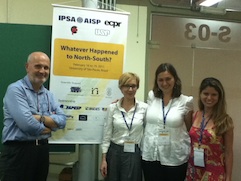
Dr. Sylvia Tiryaki, together with her colleague Dr. Mensur Akgün participated in the international conference organized by IPSA (International Political Science Association) and ECPR (European Consortium for Political Research).

The conference entitled “Whatever Happened to North-South?” was hosted by the Brazilian Political Science Association at the University of Sao Paulo between February 16-19, 2011. To read Dr. Tiryaki and Dr. Akgün’s paper entitled “Obstacles, Obsessions and Prospects of Turkey’s EU Membership” click here.

Abstract of the presented paper

Turkey has been aspiring to become a member of the EU since 1959 and has managed to accomplish several significant milestones till now. However, the accession talks are rather slow and Turkey seems still to be far away from full membership. The authors argue that obstacles delaying the process can be summarized into two primary categories, i.e. cultural differences, which are often being reduced to the notion of religion, and impediments linked to the Cyprus problem. The paper will seek to address that without a settlement of the problem on the Mediterranean island, Turkey’s membership prospects are likely to remain blurred. Following this line of reasoning, it will be claimed that strategic vision of the EU can bring an end to the existing conundrum in the accession talks. Such active move forward is in the interest of the EU, especially now that Turkey becomes a more vociferous player in the arena of international relations. Some indicators show the change in that direction, e. g. Lady Ashton’s comment in her capacity of High Representative: “We welcome the increasingly important role of Turkey in the region. In this context we will also look at the ways in which the EU and Turkey can enhance cooperation.” The issues EU tries to tackle are within the problem-solving vision of Turkey. Therefore, it will be argued that as Turkey anchors its regional position, it is likely to play a crucial role in the success of the EU’s foreign policy, if admitted to the EU.

Spain and Turkey during the Spanish EU Presidency

Spain and Turkey during the Spanish EU Presidency

Sylvia Tiryaki attended an international conference aiming to evaluate the EU-Turkey relations and the Turkish foreign policy. The event entitled “The Spanish Presidency: Expectations from Spain and Turkey” took place in Barcelona and was organized jointly by the Barcelona Centre for International Affairs (CIDOB), the Turkish Economic and Social Studies Foundation (TESEV) and the Friedrich Ebert Stiftung (FES). Sylvia Tiryaki participated as a speaker in the third Panel entitled “The Spanish Presidency: Expectations from Spain and Turkey”.
A Forgotten Promise: Ending the Isolation of Turkish Cypriots

A Forgotten Promise: Ending the Isolation of Turkish Cypriots

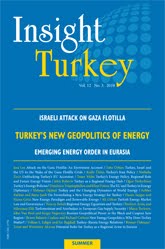
Sylvia Tiryaki and Mensur Akgün wrote an article about the isolation of the Turkish Cypriots. The analysis is available in Insight Turkey, Vol. 12, No. 1/2010. You can read the online version here.

Abstract

Despite repeated calls and promises, Turkish Cypriots live in economic, political and humanitarian isolation. This paper tries to address one aspect of it and elaborates on the legal basis of these isolationist practices imposed on one side of the island. It challenges the international legal validity of the de facto sanctions. Furthermore, it claims that lifting economic isolation will also serve as a confidence building tool between Greek and Turkish Cypriots as well as between Turkey and the Republic of Cyprus represented by the Greek Cypriots since such an act will lead to Turkey’s reciprocation and the normalization of relations with the Republic of Cyprus. It also argues that neither the UN, nor the EU has ever imposed any sanctions on Turkish Cypriots and the policy of isolation, as such, has only been practiced by the Greek Cypriots and the Greeks.is paper intends to clarify the distinction between sanctions and non-recognition. It also highlights the promises made by the EU to the Turkish Cypriots, in particular, the one made on April 26, 2004, when the Council of the EU proclaimed its commitment to end the isolation of the Turkish Cypriot community.

The Sixth Bosphorus Conference

The Sixth Bosphorus Conference

Sylvia Tiryaki participated in the sixth Bosphorus Conference, which was held in Istanbul and a theme of which was: “Turkey and the EU: Regaining Momentum“. If you are interested in reading the key conclusions from the conference, click here. The event was organized jointly by the British Council, Delegation of the European Commission to Turkey and the Turkish Economic and Social Studies Foundation.

Turkey-EU Relations: The German EU Presidency and the Prospect for Turkey-EU Relations

Turkey-EU Relations: The German EU Presidency and the Prospect for Turkey-EU Relations

Sylvia Tiryaki attended an international conference entitled “Turkey-EU Relations: The German EU Presidency and the Prospect for Turkey-EU Relations”. The event took place in Berlin on February 9, 2007 and was organized by the German Council on Foreign Relations (DGAP) and the Turkish Economic and Social Studies Foundation (TESEV). The aim of the conference was to provide a suitable and fertile environment for the discussion about the EU-Turkey relations. Sylvia Tiryaki delivered a speech during the Panel: “Seeking Solutions in the EU’s Relations with Turkey”.

German Turkish Dialogue Forum

German Turkish Dialogue Forum

Sylvia Tiryaki participated in German-Turkish Dialogue Forum which was organized by Friedrich Ebert Stiftung on 24-26 November, 2006. The event entitled “Turkey’s EU accession process-taking stock and beyond” took place in Berlin. Sylvia Tiryaki delivered a speech in the panel entitled “Turkey as a Regional Power: Is Turkey a model in terms of region?”