Vtažení Turecka do konfliktu by byl ideální scénář pro Bašára Asada, protože by sjednotil lid proti “vnějšímu nepříteli”. Turecko však sotva půjde do vojenského konfliktu se syrským režimem samo. Spíše v případě krajní nouze použije článek 5 Washingtonské smlouvy NATO v souběhu s článkem 51 Charty OSN. A to je přesně to, čemu se snaží ostatní členské státy vyhnout. Nikdo si v Sýrii nechce pálit prsty.
Málokterý z analytiků v západních demokraciích by rád viděl pokračování vlády režimu Bašára Asada v Sýrii. Navzdory některým zvláštním charakteristikám skladby syrské opozice by se shodli na tom, že cesty zpět už není.
Originál článku je prístupný v plnom znení na blogu IHNED.cz.
On October 8-10, 2012, GPoT Deputy Director Dr. Sylvia Tiryaki attended the Istanbul Forum 2012, an initiative launched by the Center for Strategic Communication (STRATİM). This year, the Istanbul Forum focused on the Middle East and regional issues.
The Istanbul Forum is an annual forum which includes European, American, Turkish and Middle Eastern participants with an aim to provide a forum for high-level, off-the-record discussion among diverse decision-makers and opinion shapers on shared policy challenges. This year’s 3rd Istanbul Forum started with opening remarks by H.E. President Abdullah Gül. The program included six sessions of closed roundtables taking up different critical themes.
Following the workshop entitled “The Multilateral Track of Euro-Mediterranean Relations: The Role of the Union for the Mediterranean”, which was organized by the Secretariat of the Union for the Mediterranean, European Institute of the Mediterranean (IEMed) and Euro-Mediterranean Study Commission (EuroMeSCo) in Barcelona on October 3, 2012, Dr. Tiryaki participated in the EuroMeSCo Annual Conference. The theme of this year’s conference taking place in Barcelona between October 4-5, 2012 was “Europe, the Mediterranean and the Arab Spring: Crisis as an Opportunity”.
AK Party drops EU goal from long-term foreign policy outlook
Today’s Zaman | Sinem Cengiz | Oct 1, 2012
…According to Sylvia Tiryaki, an expert in international law and the deputy director of the Global Political Trends Center, the importance of the EU has been lost in Turkish politics these days. The Turkish public no longer discusses EU membership, she told Today’s Zaman.
To read the whole article, please visit the website of the original source here.
News.Az interviews Dr. Sylvia Tiryaki, Deputy Director, Global Political Trends Center, Istanbul Kültür University.
There are few evidences of Turkey to become a new regional superpower. How would you estimate Turkish policy in the region?
Actually, there are more than few indicators. Almost all the opinion polls including Pew, Tesev, Brookings Institute show that people of the region like Turkey, respect Turkey and endorse its foreign policy in the region. Moreover, Turkey is increasingly becoming visible in the international fora, concerning the problems of the region.
There is an opinion that Turkey preferred to enhance its cooperation with the Islamic world after some problems has occurred in cooperation between Ankara and the EU. Will this step bring more benefits for Turkey, due to negative perception of Turkish membership to the EU, or just the opposite Turkey will loose restricting its cooperation with Brussels?
First of all, these are not contradictory but complementary processes. Secondly, there is not much correlation between Turkey’ accession negotiations’ pace (or their “hiccups”) and Turkey’s involvement with the Middle East. Some of the changes in the Turkish foreign policy towards the region are by design, due to Ahmet Davutoglu’s vision, some of the changes happened by default. Israel Gaza intervention in 2009 was the turning point in the Turkish foreign policy, rather than the nature of the Turkey-EU relations.
— To read the whole article, please visit the website of the original source.
Addressing Violent Extremism: Creating Space for Civil Society
GPoT Center’s Deputy Director Dr. Sylvia Tiryaki attended the conference “Addressing violent extremism: Creating space for civil society”, a side event on the occasion of the UN General Assembly review of the Global Counterterrorism Strategy, which was held at the Church Center for the United Nations in New York on 26 June.
Civil society representatives from all around the world participated at the event, making for 38 different NGO’s. Other than that representatives of Permanent Missions to the United Nations, the conference included United Nations Agencies (such as Counter-Terrorism Executive Directorate [CTED], United Nations Refugee Agency [UNHCR], UN Alliance of Civilizations [UN AOC], Peacebuilding Support Office [PBSO], Ombudsman of the Security Council’s 1267 Committee, UN SC 1267 Committee, UN Interregional Crime and Justice Research Institute [UNICRI], and UNESCO). Yet other agencies and organizations, including the International Organization for Migration [IOM] or Global Human Rights Fund were amongst the participants. The conference was organized by The Civil Society Network for Human Security, a global collective civil society platform working to more effectively countering violent extremism. In doing so, it aims at connecting transnational organizations and states with local civil society organizations, engaging policy makers, state actors, and inter-regional bodies.
The Civil Society Network for Human Security platform is initiated by the Dutch development organization Cordaid and the Global Partnership for the Prevention of Armed Conflict (GPPAC), a global network of civil society organizations working actively in the field of conflict prevention and peacemaking.
Do EU? Nadšení Turků je pryč, zůstává apatie | Blog IHNED.cz
Turecko začalo oficiálně přístupové rozhovory s EU v roce 2005. To byl čas plný nadějí, očekávání a roční Zprávy Evropské komise o progresi byly povinným čtením v téměř každé domácnosti. Toto už dávno není pravda. Jestliže se ještě nedávno zdálo, že budoucnost Turecka závisí výlučně na výročních a méně výročních zprávách vydaných různými organizacemi Evropské unie, dnes už je těžké najít někoho, kdo by v Turecku jen pohledem zavadil o zprávu týkající se pozice EU vůči této zemi.
Tak jako jsou občané EU unaveni rozšiřováním, jsou Turci unaveni (a ve většině případů i znuděni) zprávami o tom, jak a proč by Turecko členem EU být nemělo. Rozdíl mezi postojem turecké veřejnosti a euroskeptické veřejnosti jiných zemí je však v tom, že Turci nejsou naladěni negativně vůči EU. Oni se stali prostě apatickými. Turecko začalo oficiálně přístupové rozhovory s EU 3. října 2005. To byl čas plný nadějí, očekávání a roční Zprávy Evropské komise o pokroku byly povinným čtením v téměř každé domácnosti
Originál článku je prístupný v plnom znení nablogu IHNED.cz.
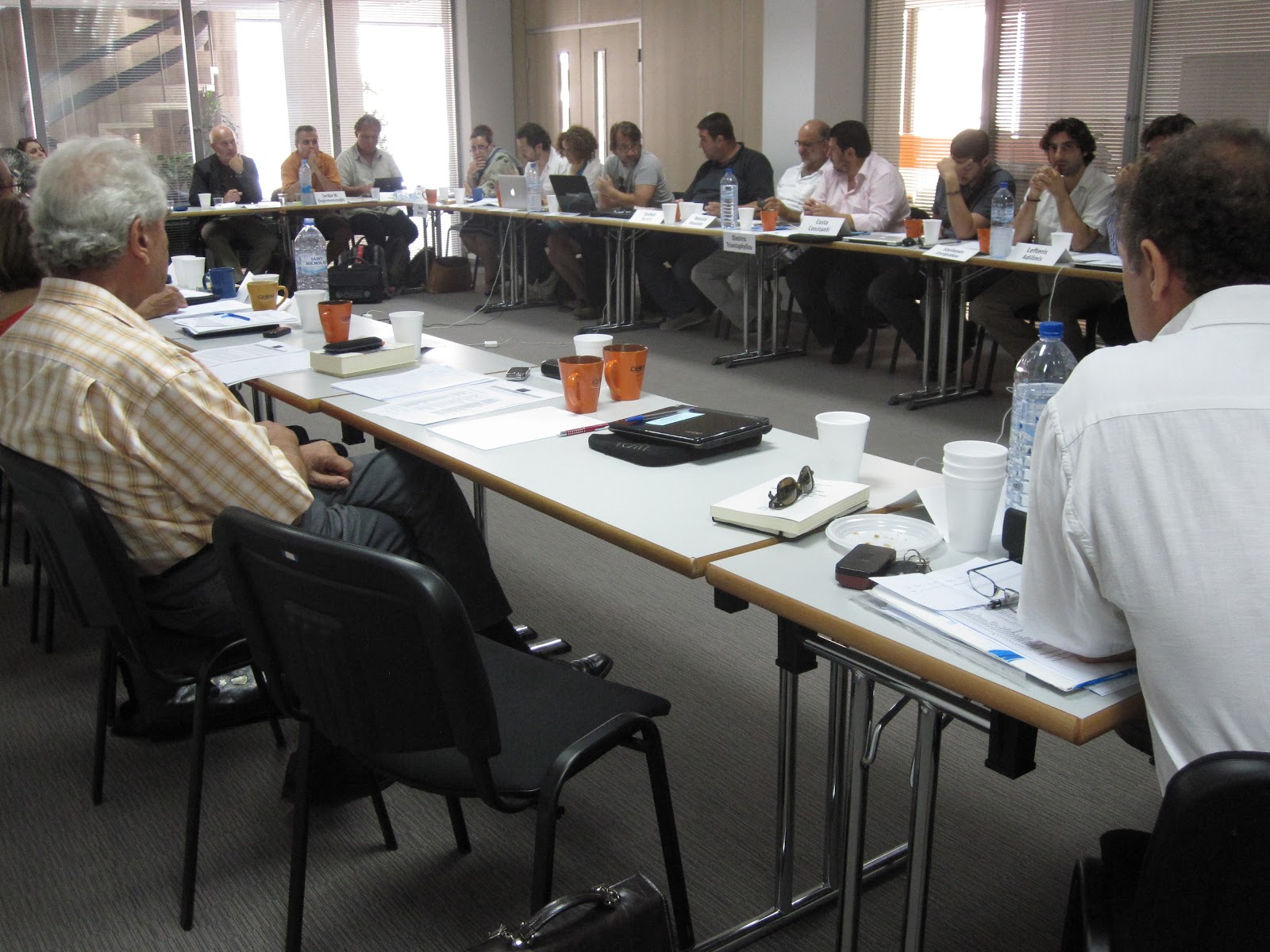
On June 15-17, 2012, Dr. Sylvia Tiryaki attended a roundtable discussion entitled “Creative Initiatives to Move Forward,” conducted as part of the Cyprus Academic Dialogue (CAD), in the city of Limassol. CAD, which first met in July 2010, is a forum of Greek Cypriot, Turkish Cypriot, Turkish and Greek scholars who aim to contribute to a peaceful solution of the Cyprus issue on the academic level.
Dr. Tiryaki started to blog on Ihned.cz. Her first article about the elections in Egypt and the role of Turkey in the Middle East is accessible here.
Excerpt in Czech:
Na otázku, jakou úlohu by měl hrát islám v egyptské politice, 54 procent tázaných Egypťanů uvedlo, že takovou, jakou hraje v Turecku. Výsledky to nejsou překvapivé. Turecko už je delší dobu vnímáno jako země, která konkuruje tradičním územním mocnostem jako Írán nebo Saúdská Arábie.
Dr. Tiryaki Quoted in M. Tokyay’s Article about Cyprus in SES Türkiye
Turkey-EU Relations: Where Do They Stand Going Into 2012?
By Menekşe Tokyay | SES Türkiye
Istanbul, January 3, 2012
2011 did not signal there is a light at the end of Turkey’s EU tunnel, and 2012 looks to be even more problematic.
As Turkey enters 2012, its EU accession process remains on the brink of paralysis. On the political front there has not been any significant progress, while the eurozone crisis has shifted European and Turkish policy makers’ attention away from further expansion and integration.
Since June 2010, not a single new chapter has been opened. Out of 33 chapters, only 13 are open, 17 are blocked, and Turkey appears to have no intention to take the steps necessary to open the remaining three. The general picture raises questions about whether the road to the EU may well be heading towards a dead end.
Nilgun Arisan Eralp, from the Economic Policy Research Foundation of Turkey (TEPAV), describes EU-Turkey relations as being in a “state of comatose”, adding that the EU has lost almost all leverage over Turkey.
According to another EU expert, Sema Capanoglu of the Economic Development Foundation of Turkey (IKV), there is stagnation in the negotiation process because of the political barriers placed before Turkey by the EU.
The biggest political obstacle to Turkey’s EU accession negotiations remains the dormant Cyprus conflict, over which neither the Greek nor Turkish Cypriots seem willing to budge from their positions.
The inability of both communities on the island to come to agreement is mirrored by Turkey and the EU who, entrenched as they are in their respective policies towards the divided island, leave themselves little room to advance Turkey’s membership prospects.
Nonetheless, 2011 did witness an increased interest by the international community to resolve the Cyprus conflict, which according to Sylvia Tiryaki, deputy director of the Global Political Trends Centre in Istanbul, can be attributed to three main factors: “The initiation by UN Secretary General Ban Ki-Moon of a series of meetings between the leaders of the two communities; the upcoming EU term presidency of the Republic of Cyprus in the second half of 2012 and the Greek Cypriots’ decision to start drilling for offshore oil and gas.”
Tiryaki says that despite the high expectations for a final settlement, resolution of the Cyprus conflict is still not near. “Leaders have been discussing approximately the same issues since 1968 without a major success,” she says, “and 2012 will likely pass in the same fashion.”
“Let’s hope that Greek Cypriots do not try to stage more fait accompli similar to that of unilateral hydrocarbons drilling prior to the final settlement,” she adds.
The upcoming EU presidency of the Greek Cypriots has been a thorny issue that threatens to completely derail Turkish-EU co-operation in a number of areas, with Turkish authorities delivering ultimatums that it will freeze relations with the EU if the Greek Cypriots are handed the rotating EU presidency in July.
In response, EU officials declared at the December summit that Turkey must show full respect for the role of the EU presidency, setting the two sides up for a troublesome relationship in the second half of 2012.
Taking into consideration the barriers to advancing relations, the European Commission announced a new “positive agenda” for EU-Turkey relations in an effort to maintain some degree of momentum. The new agenda will focus on three areas of common concern: resolution of the problems related with the Customs Union; easing of visa requirements; and co-operation in counterterrorism efforts.
“This agenda may help strengthen relations between Turkey and the EU as a complement to the negotiation process,” Selcen Oner of Bahcesehir University underlines.
However, some claim that this new agenda is an attempt to distract attention away from the stalled accession process.
Despite the stand-off over Cyprus, there are also important European actors who say Europe needs Turkey just as much as Turkey needs Europe. Eleven EU foreign ministers published a joint text in EU Observer on December 1st, saying that Turkey’s accession process is of vital strategic and economic importance for both the EU and Turkey.
“It’s common practice to refer to such spectacular initiatives just before big events in the EU, like the summits,” explains former ambassador Ozdem Sanberk. “However, they are also important in terms of balancing the negative messages towards the member states’ public opinions.”
In the face of political roadblocks, Turkey-EU economic ties continue to underpin the relationship, fostered this year by Turkey’s rapid economic growth in a generally bleak global economic environment.
“Despite the economic recession in the EU, 85% of all global investments in Turkey and 92% of investments made in the first half of 2011 came from EU member states,” explains EU expert Capanoglu.
Turkey also became the world’s fastest growing economy with growth of 10.2% in the first half of 2011.
“Turkey has had an increasing self-confidence in 2011 because of its economic growth,” notes Oner.
This self-confidence was reflected in a statement made in December during a visit to Denmark by Turkey’s EU Minister Egemen Bagis, where he said in reference to the European crisis, “Hold on Europe! Turkey is coming to the rescue!”
However much Turkish officials congratulate themselves, Turkey still remains vulnerable to European economic woes and will likely sink or rise along with the economic fate of Europe.
Approximately half of Turkey’s exports go to the EU, while nearly 40% of Turkey’s imports come from the EU.
Europe’s debt crisis has also had an impact on Turkey’s political integration, as the EU focused on making economic recovery a top priority, and shifted away from issues like enlargement.
Economic issues and Cyprus aside, Turkey still faces a long upward struggle to reach European standards, especially those involving fundamental freedoms and democratisation.
Reforms have been slow, and in some areas Turkey even appears to be digressing from its European trajectory, sparking concern and condemnation by the pro-Europe camp in Turkey and policy makers in Europe.
The European Commission’s October progress report for Turkey “emphasised deficiencies in the fields of freedom of speech, freedom of media and long detention periods in Turkey”, explains Oner.
Experts warn that the EU accession process has started to suffer from a lack of domestic ownership and willingness for further reforms. The EU, which had in the past acted as an anchor for reforms, may no longer be playing the same role.
“Turkey has slowed down the reform process with a lack of progress in the fields of transparency, accountability, the fight against corruption, gender equality, the freedom of expression, freedom of the press and labour unions,” Eralp underlines.
Since 1998 — the starting date of the progress reports — the EU has offered a roadmap for domestically-driven efforts at democratisation, argues Professor Murat Somer of Koc University.
“Now that Turkish-EU relations and the EU’s own future are uncertain, the marriage between capitalism and liberal democracy is troubled, and Turks no longer look to Europe to evaluate their democracy. How liberal-democratic will Turkey be in the future?” Somer asks.
Looking forward, analysts see a number of formulas to at least trudge through the coming year.
The ongoing uncertainty in the Middle East and North Africa on the heels of Arab uprisings has increased Turkey’s strategic value to Europe and provided one area where the two partners can work together.
“The relations can be given a fresh impetus, if both parties can benefit from the opportunities provided by the current international conjuncture,” says Eralp, referring to the anti-government, pro-democracy movements sweeping through the Middle East and North Africa.
Still, Sanberk argues the resolution of the Cyprus conflict and the opening of blocked chapters provide the only critical key for paving the way to improved relations.
“There is also an effort from the EU side in order to revive stalled EU-Turkey relations. However, all these efforts can only reach their end if the political and judicial impasses are solved,” he concludes.
Looking at the direction talks between the two communities on Cyprus are heading, the Greek Cypriot’s control of the EU presidency in the second half of 2012, the lack of consensus on Turkey’s membership in EU member states, the eurozone crisis, and the rise of euroscepticism in Turkish public opinion, it is difficult to say that 2012 looks promising for EU-Turkey relations.
— To read the article on the website of the original source, click here.

 Z blogu Sylvie Tiryaki na portáli IHNED.cz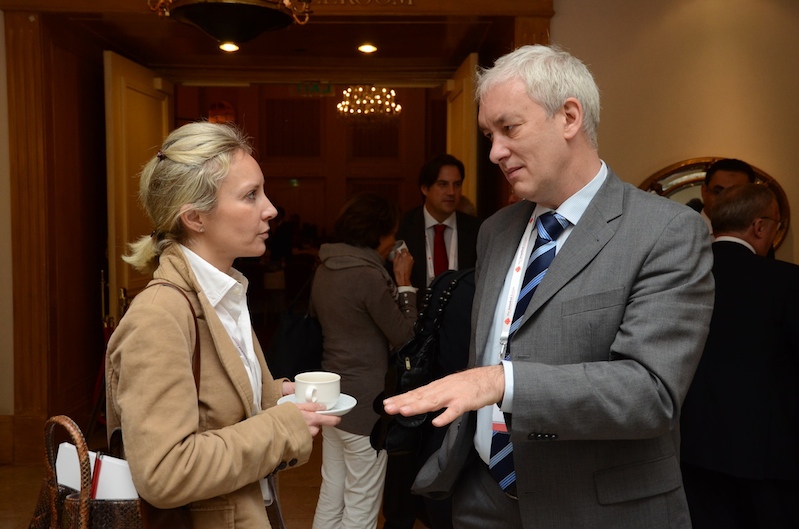



 GPoT Center’s Deputy Director Dr. Sylvia Tiryaki attended the conference “Addressing violent extremism: Creating space for civil society”, a side event on the occasion of the UN General Assembly review of the Global Counterterrorism Strategy, which was held at the Church Center for the United Nations in New York on 26 June.